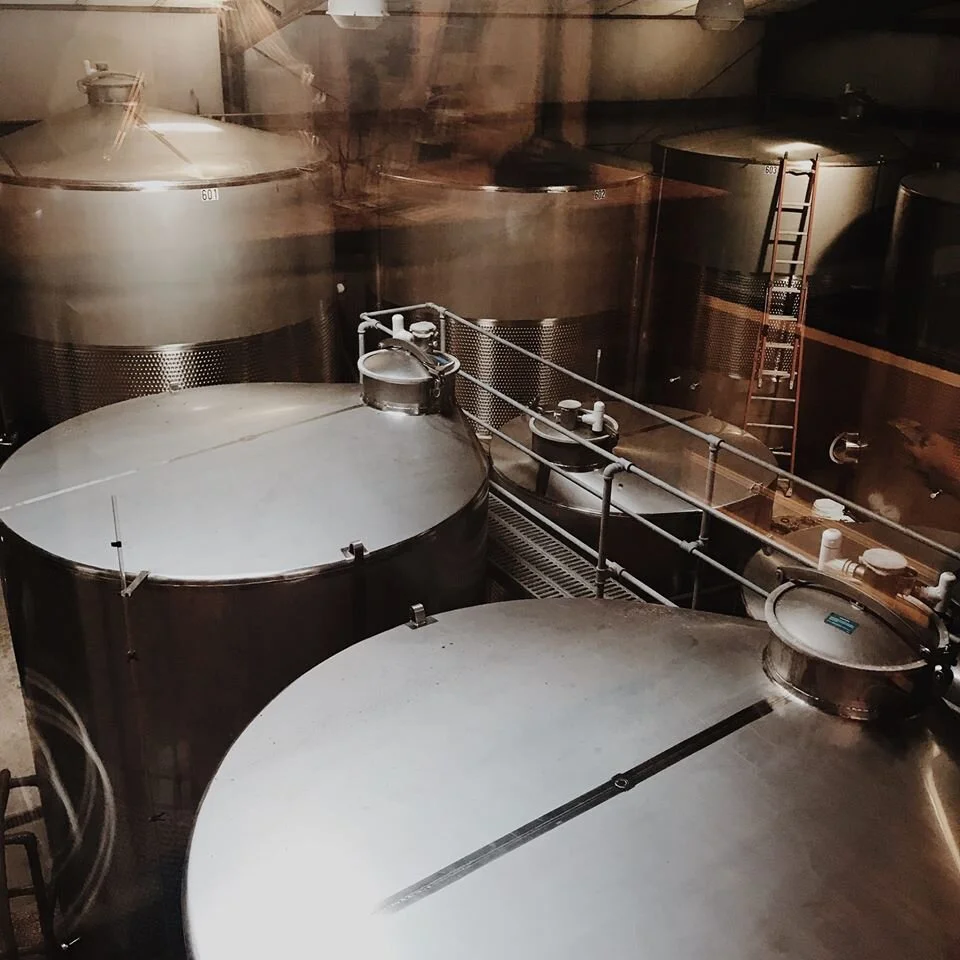
The grapes are crushed and pressed in a state-of-the-art facility. Our winery boasts over 70,000 gallons of temperature-controlled, stainless steel cooperage as well as over 1,980 gallons of barrels for oak aging. The commitment to quality and efficiency is showcased in the press used for processing. The current wine press was added in 2004 and is a 12,000 liter Europress. This wine press was custom-built for Chautauqua by the Scharfenberger Company of Germany. Currently, this is the largest press of its kind East of the Rocky Mountains. This press can gently extract the juice from 30 tons of fresh grapes, or 35 tons of fermented reds in a single load. The winery also has its own in-house lab for the winemaker to evaluate field samples and wines as part of Chautauqua's strict Quality Assurance program.
After crushing, the white grapes are immediately pressed and the juice is quickly chilled. When the juice is clarified, cultured wine yeast is added and the fermentation process begins. The white wines are generally fermented at very cool temperatures, around 50-55 degrees F, this to capture aroma and flavor. Reds are handled a bit differently. The grapes are crushed into fermentation tanks while select wine yeast is added. They are then fermented "on the skins" for several days to extract the flavor and color from the skin of the grape. When ready, the free run fermenting juice is drained, and the skins and pulp are pressed. Red wines are fermented at cool temperatures, usually 70 degrees F. Both white and red wines ferment until all sugar is converted to alcohol, this itself ending the fermentation process. The wines are then allowed to settle and any blending that is done happens at this stage. Thereafter, the wines are clarified and stabilized in preparation for bottling. Grapes harvested in the fall are made into wines which are typically ready for bottling the following spring.